
APCCA’s Person-Centred and Pluralistic Creative Arts Approach
The founder of APCCA, Ani de la Prida integrates the key principles, elements and methods of the four person-centred creative therapy models, taking them further.
Pluralism – Ten Key Principles
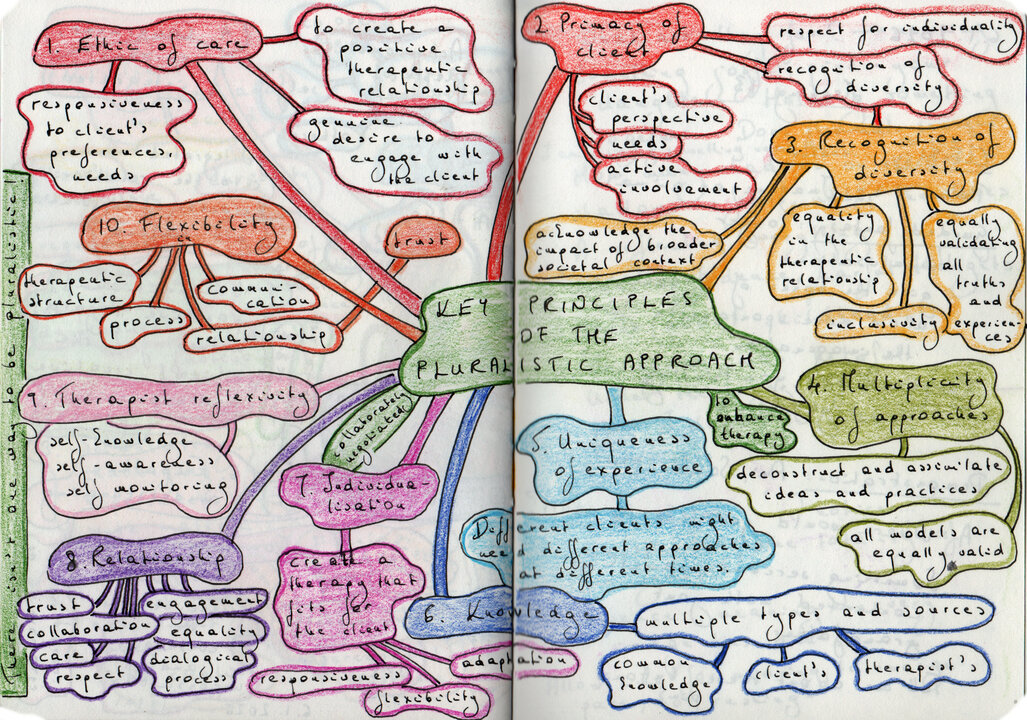
- Ethic of care
- Primacy of the client
- Recognition of diversity
- Multiplicity of approaches
- Uniqueness of experience
- Multiple types and sources of knowledge
- Individualisation of therapy
- Relationship
- Therapist reflexivity
- Flexibility
Read more about them here.
Seven facilitative conditions
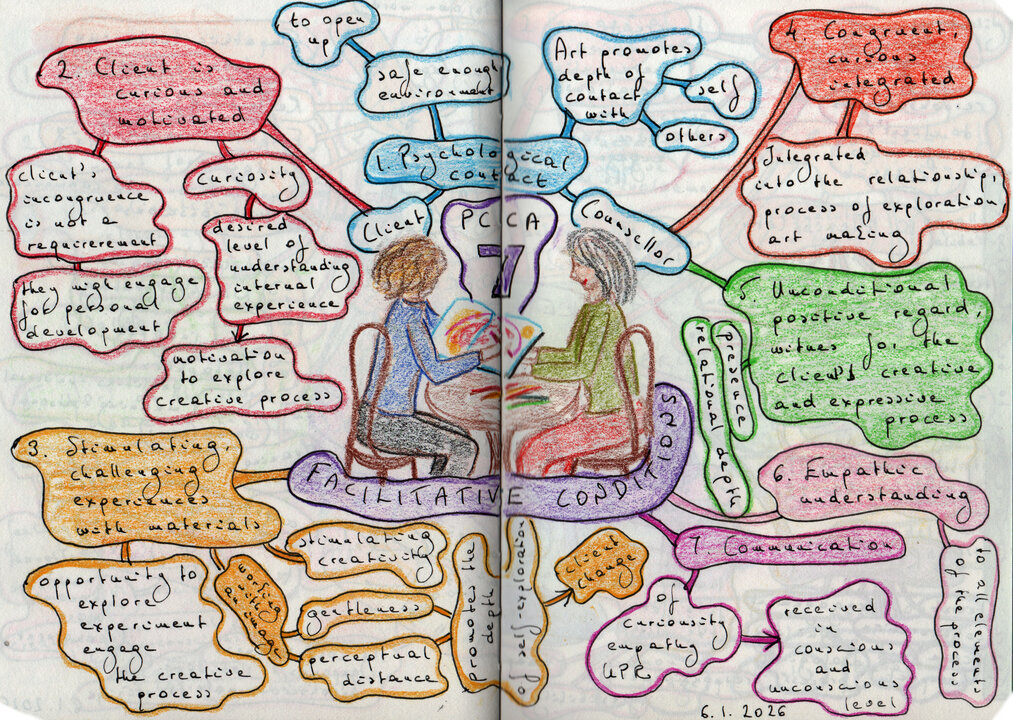
- Psychological contact
- Client’s curiosity and motivation: gap between current and desired level of understanding internal experience, motivation to explore the creative process.
- Stimulating, challenging experiences with materials: stimulating creativity, opportunity to explore, experiment and engage the creative process. Working with an image is a gentle way of deep self-exploration, it creates perceptual distance, and promotes client change.
- The facilitator is congruent, curious and integrated into the relationship and the process of art making and exploration.
- The facilitator experiences unconditional positive regard towards the client. They witness the client’s creative and expressive process.
- Empathic understanding.
- The facilitator communicates their curiosity, empathy and UPR, and the client receives this communication in both conscious and unconscious levels. Read more about them here.
Six stages of the therapeutic process
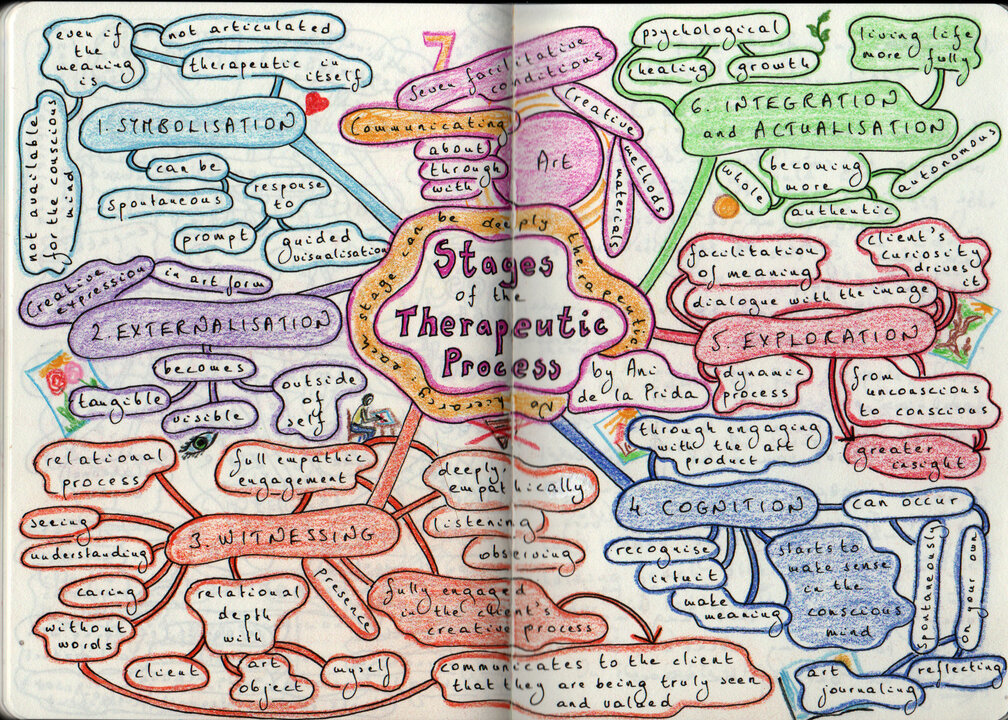
- Symbolisation. It can be spontaneous or response to a prompt or guided visualisation. Symbolisation is therapeutic in itself, even if the meaning is not articulated or available for the conscious awareness.
- Externalisation: creative expression. The symbol becomes something visible and tangible, outside of self.
- Witnessing: quality of being deeply empathically observant, fully engaged with the client’s creative process, presence, holding a safe place, empathic listening, seeing, caring, understanding, and relational depth with the client, the art object and ourselves as well. Communicating to the client that they are being truly listened to and valued.
- Cognition: through engaging with the art product, recognising, intuiting, making meaning, starting to making sense in the conscious mind. It can occur spontaneously, by reflection, art journaling, etc.
- Exploration: facilitation of meaning, dialogue with the image, bringing the client into greater insight of themselves. It is a dynamic process, driven by the client’s curiosity, bringing unconscious material into conscious awareness.
- Integration and actualisation: psychological healing and growth, becoming more whole, autonomy, authenticity, living life more fully.